Alps tour pricing explained comes down to one thing: how much of your week is pre-built and professionally run, versus how much you assemble yourself once you land. EuroThrills trips sit in a published range of $8,500–$14,500 per person, built around small groups of 12–20 guests (always fewer than 20) and 7–9 days on the […]
Alps tour pricing explained comes down to one thing: how much of your week is pre-built and professionally run, versus how much you assemble yourself once you land. EuroThrills trips sit in a published range of $8,500–$14,500 per person, built around small groups of 12–20 guests (always fewer than 20) and 7–9 days on the ground.
You’re not paying for “a ski vacation.” You’re paying for a week where the hard parts are handled: named, on-ground guides, 24/7 in-trip support, and a pre-trip planning call with the person running your trip. That’s the real line item.
Alps tour pricing explained starts with what’s locked in before you arrive: trip length, group size, and the on-ground operating model. EuroThrills runs 7-night departures for the flagship ski weeks listed, with 12–20 guests, and support that’s designed for Americans who don’t want to spend day one translating a lift map in a wind tunnel.
You’ll feel the difference at 8:45 a.m. when the group moves with purpose instead of debate. Boots buckling, radios checked, a plan for the first sector. No wandering around a base area trying to decode European piste colors while your legs cool off.
These are the inclusions that change your week the most, and they’re consistently part of the EuroThrills model:
Small-group operations: 12–20 guests, always fewer than 20
Trip duration: 7–9 days (the listed ski weeks are 7 nights)
On-ground guides: local, in the Alps, not remote coordination
24/7 in-trip support: real-time fixes when weather or logistics shift
Pre-trip planning call: you align expectations before you fly
One honest limitation: this model isn’t built for bargain hunters. If you want the cheapest possible week, you’ll do better piecing it together yourself and accepting the friction.
How EuroThrills runs the week on the ground
The price range isn’t random. It tracks to three practical variables: how specialized the guiding is, how “character property” the lodging is, and how ambitious the terrain and routing are for the week you’re booking.
You’ll notice it in your body, not your inbox. A guide who knows the exits off a complex sector keeps you skiing longer. A ski-in/ski-out base keeps your hands warm because you’re not standing around waiting on transfers.
What changes | Lower end of range | Upper end of range | What you feel on snow |
|---|---|---|---|
Trip length | 7 days | 9 days | More ski days, fewer rushed mornings |
Group size | 12–20 | 12–20 | Same cap, pace depends on guiding and routing |
Guiding | on-ground guide | named, highly local guide | fewer wrong turns, better timing on sectors |
Lodging | quality base | character property focus | better recovery, smoother mornings |
Support | planned logistics | 24/7 support emphasis | faster fixes when weather shifts |
No fluff. This is the part that actually changes outcomes.
“Included” should mean you can point to it on a calendar or a ski map. EuroThrills publishes a model built around on-ground guides, 24/7 in-trip support, and a pre-trip planning call, with trips designed for Americans 40–62 traveling in small groups of 12–20.
And yes, the difference is felt at lunch. In the Alps, lunch is part of the rhythm. You stop, you warm up, you reset your legs, and you go again. The smell of wood smoke on a terrace jacket is a real thing.
Local guides on the ground during the trip
24/7 in-trip support
Pre-trip planning call with the trip lead
English-language orientation and American-market translation
Small-group format: 12–20 guests, always fewer than 20
If I’m being picky, the one inclusion you should never assume without checking is the exact lodging setup on every departure. One trip is explicit about ski-in/ski-out. Another isn’t.
EuroThrills winter skiing trip lineup
Alps tour pricing explained best in concrete terms, so use two published trips as reference points. Both are 7 nights, both run in small groups of 12–20, and both are built for advanced Americans who want big terrain without wasting days learning European systems the hard way.
The difference is the week’s identity: a “classic” base-and-unlock approach in Switzerland, versus an advanced, linked-domain week in France with a stated piste scale.
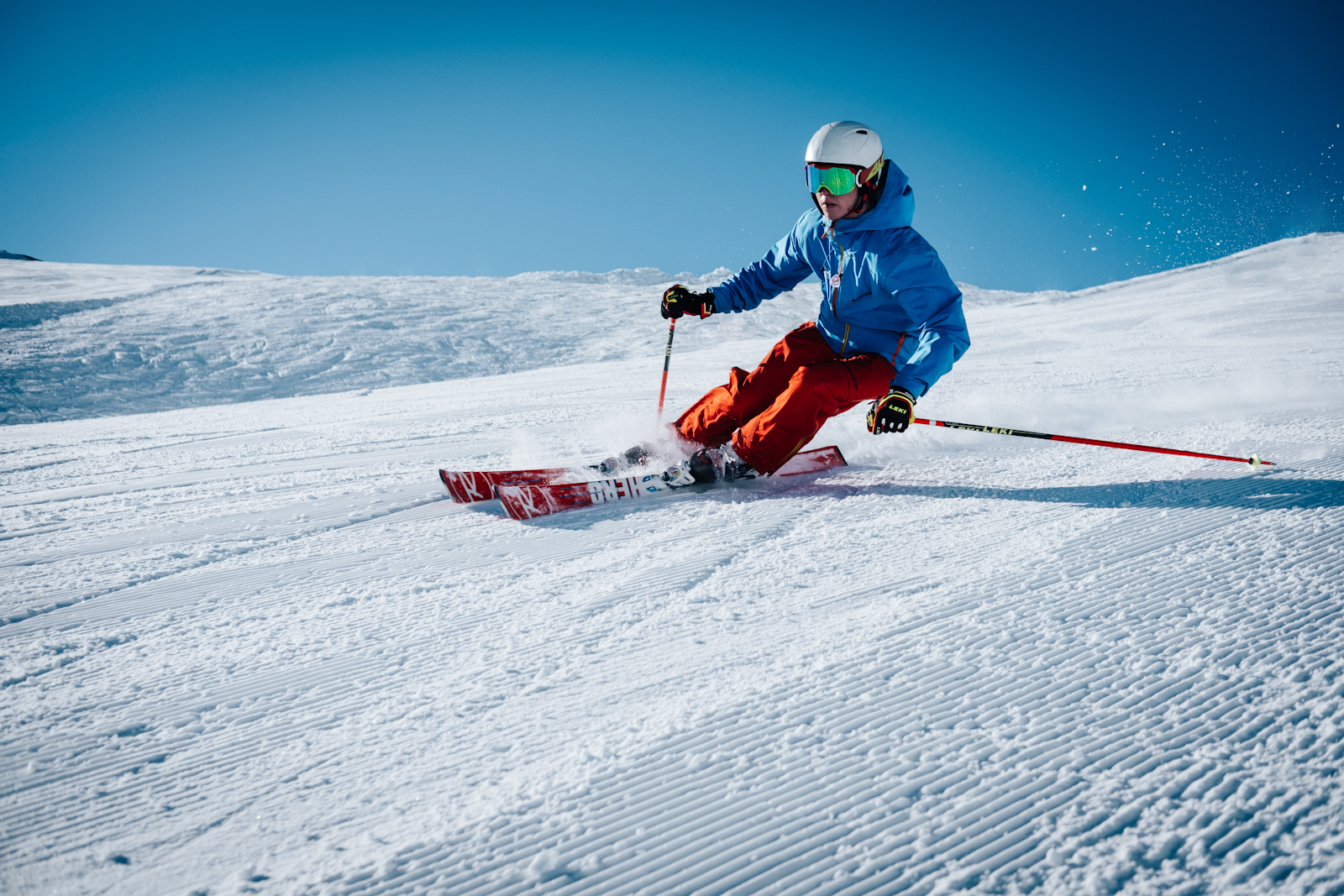
Verbier Classic Ski Week is published at from $9,800 per person. Dolomites Road Cycling Classic is from $8,500 per person (cycling, not skiing), which helps bracket the lower end of the overall $8,500–$14,500 range with real listings.
Trip: Verbier Classic Ski Week
Location: Verbier, Switzerland
Duration: 7 nights
Group size: 12–20 guests
Lodging anchor: ski-in/ski-out chalet hotel
Guide note: guide has skied Verbier for twelve winters
Ski domain access: 4 Vallées
Published starting price: from $9,800 / person
Published rating: 4.9 (28 guests)
The ski-in/ski-out detail is not small. You’ll use it twice a day without thinking about it, especially when the air is cold enough that your gloves feel stiff by the second buckle.
Verbier Classic Ski Week trip details
Trip: Val d’Isère & Tignes Powder Week
Location: Val d’Isère, France (linked with Tignes in Espace Killy)
Duration: 7 nights
Ski level: Advanced
Terrain scale: 300 km of piste
Guide note: led by a French National Ski School guide
One watchout: a linked two-resort system rewards timing. If you drift across the map late in the day, you’ll feel that pressure in your calves and your watch, not in a marketing line.
Val d’Isère & Tignes Powder Week trip page
Price-shopping usually ignores the cost of being wrong. Wrong sector. Wrong timing. Wrong read on visibility. In a large European domain, those mistakes don’t just waste money. They waste vertical.
You hear it on the chairlift when someone says they “ended up on a flat traverse” again. That’s the sound of a day leaking away.
Advanced North American skiers typically need a short adjustment period for:
European piste color systems (country and resort differences matter)
Intersection density (more junctions, more decisions)
Longer continuous descents (fatigue shows up differently)
Off-piste norms (ungroomed terrain outside marked pistes, often lift-accessed)
My specific advice: on day one, ski one sector deep, not five sectors wide. You want a mental map you can actually use when the light goes flat.
The strongest value signals in this model are operational. EuroThrills states named, on-ground guides, 24/7 in-trip support, and a pre-trip planning call. Those aren’t nice-to-haves. They’re the pieces that keep a week coherent when conditions shift.
The sensory tell is simple. A calm morning. No frantic regrouping. You’re sipping coffee, not sprinting to fix a missed meeting point.
This is where you make the decision like an advanced skier, not like a spreadsheet. The resorts ski differently, and the “value” you get from a guided week changes depending on your priorities.
Verbier, Switzerland gives you access to the 4 Vallées and a resort identity that leans steep and off-piste. The EuroThrills Verbier week stacks two concrete value levers: a ski-in/ski-out chalet hotel and a guide with twelve winters of local familiarity.
Book this if you want a week where off-piste is central, and you don’t want to spend half the trip figuring out which sector is best in today’s weather.
Val d’Isère, France links with Tignes in Espace Killy, with 300 km of piste plus extensive off-piste options. That piste scale matters for first-time Europe skiers. It gives you high-flow groomers for warm-ups, visibility days, and recovery legs without leaving the domain.
And yes, a French National Ski School guide changes how efficiently you move across Val and Tignes. Fewer dead-end choices. More skiing.
If you’re scanning pricing pages, train your eye to pick out the inclusions that change the week. Skip the vague stuff. Look for numbers, roles, and durations.
Nights on the ground: look for 7 nights or 7–9 days
Group size cap: 12–20, always fewer than 20
Guide credential and specificity: “named” and locally based beats generic
Support model: 24/7 in-trip support is operational, not decorative
Domain scale or access: 4 Vallées or 300 km of piste are decision-grade facts
One more picky note: if a trip doesn’t specify lodging access (ski-in/ski-out vs walk/transfer), treat that as an open variable and verify before you commit.
Alps tour pricing explained is clearest when you tie dollars to fixed operations. EuroThrills publishes $8,500–$14,500 per person for 7–9 day small-group Alps trips, typically 12–20 guests, with on-ground guides, 24/7 in-trip support, and a pre-trip planning call. Use trip facts to judge value: Verbier Classic Ski Week is 7 nights with ski-in/ski-out lodging and a guide with twelve winters in Verbier, plus access to the 4 Vallées. Val d’Isère & Tignes Powder Week is 7 nights in Espace Killy with 300 km of piste and a French National Ski School guide.
 Powered by TypeHero
Guided by instructors who wrote the Field Guide — and at destinations they chose.